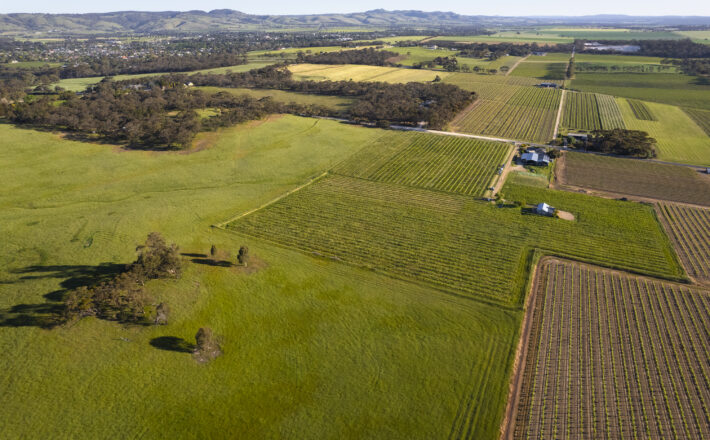
Situated in the picturesque Rylstone and Mudgee region of New South Wales, De Beaurepaire Wines operates under three guiding principles: family, regenerative, and terroir-driven. Established in 1998, this family wine estate views sustainability as a fundamental act of custodianship, making decisions that look decades ahead to ensure the land is left healthier for the next generation. For the team, achieving certification was simply a natural extension of their belief that great wine starts with healthy soils, robust biodiversity, and resilient vines.
Rather than maintaining a bare vineyard floor, De Beaurepaire is progressively transforming the earth beneath their vines into a thriving, living ecosystem. The team has completely eliminated tillage across their 55-hectare vineyard, opting instead to plant diverse grasses and legumes. They now mow under the vines to replace harsh herbicides entirely, and pruned vine material is thoughtfully returned to the soil as biochar. Furthermore, a partnership with Watershed Landcare has seen 700 trees planted to regenerate the local waterways. This regenerative approach extends across the wider 210-hectare property, where 28 hectares of multi-species pasture and winter cattle grazing help the entire farm function as one integrated biological system.
Some of the most critical work happening at De Beaurepaire is entirely invisible to the naked eye. The team’s true innovation lies in biology; they actively culture and brew beneficial microorganisms on-site. By applying these biological solutions throughout the vineyard, they naturally suppress harmful fungi and disease pressure, effectively replacing their conventional fungicide programme and cutting chemical use by roughly 60% from peak levels. This incredible shift has also reduced their annual spray costs by approximately $60,000. Looking ahead to 2027, they plan to take this precision viticulture a step further by commencing drone applications for their bio-suppression sprays and foliar nutrients.


Bordered by the Cudgegong River on two sides and native bushland on another, the vineyard sits within a vibrant woodland ecosystem. Wedge-tailed eagles with two-metre wingspans regularly soar overhead, while kangaroos, occasional koalas, and native fish like the threatened River Blackfish share the surrounding habitat. Even the resident magpies have adapted, cleverly realising that the vineyard’s humane laser bird-deterrence system is completely harmless to them while it discourages other birds from the fruit.
For visitors exploring the Regional Tasting Trail, De Beaurepaire offers profound ways to connect with the land. Guests can book the private Vigneron Experience hosted by co-founder Richard de Beaurepaire, which concludes with an intimate tasting in the convict-built Grafter Room—a space once used to stable the 1898 Melbourne Cup winner. Alternatively, the quarterly Terroir Talk hosted by Will takes guests deep into the vineyard to witness these regenerative practices firsthand.
Before leaving the area, the team highly recommends exploring their local gem: Wollemi National Park and the surrounding Dabee-Wiradjuri Country. This awe-inspiring landscape of cathedral-like box canyons, ancient Wollemi Pines, and deep Indigenous history is a powerful reminder of why caring for the country matters so deeply to the estate.